
Desk
Reporting
Trackers
Maps
Tools
Concerns rise as thousands of doctors pass exams to practice abroad

The Sri Lankan health sector is facing a mounting crisis as an alarming number of doctors seek opportunities abroad. Recent reports indicate that nearly 5,000 medical professionals have successfully passed qualifying exams for international practice, a trend that has raised serious concerns within the Health Ministry. This potential mass exodus is particularly troubling given that the country's government health institutions currently employ approximately 20,000 doctors.
The United Kingdom has emerged as the premier destination for Sri Lankan doctors seeking opportunities abroad, with a significant number of Sri Lankan medical professionals already established in the UK healthcare system. To practice medicine in the UK, international doctors must pass the Professional and Linguistic Assessments Board (PLAB) exam, which tests their readiness to work in the UK healthcare system. The exam attracts medical professionals from various countries, including Sri Lanka, India, Pakistan, Nigeria, and Egypt, among others.
Recent report from Daily Mirror highlights the significant participation of Sri Lankan doctors in the PLAB exam. Out of a total of 3,500 candidates who recently undertook the exam, approximately 750 were from Sri Lanka with 550 of them successfully passing the exam out of the total 2,100 successful candidates.
The PLAB exam is structured in two distinct parts, each designed to thoroughly assess the capabilities of aspiring medical practitioners. The first part consists of a comprehensive multiple-choice test comprising 180 questions, evaluating candidates' theoretical knowledge. The second part is a practical assessment that challenges candidates with 16 different scenarios, testing their ability to apply medical knowledge in simulated real-world situations.
To obtain a license to practice medicine in the United Kingdom, doctors must successfully complete both parts of the PLAB exam. This rigorous process ensures that only those who demonstrate proficiency in both theoretical knowledge and practical skills are permitted to practice in the UK healthcare system. Recognizing the challenging nature of the exam, each candidate is allowed up to four attempts to clear both parts, providing multiple opportunities for success while maintaining high standards.
Sri Lankan doctors have demonstrated remarkable proficiency in recent years in this exam, particularly in the PLAB 1 theory component. According to report published by the General Medical Council (GMC) UK, analyzing data from 2018 to 2021, Sri Lankan medical professionals achieved the highest pass rate for PLAB 1 at an impressive 89.6%, outperforming candidates from other nationalities.
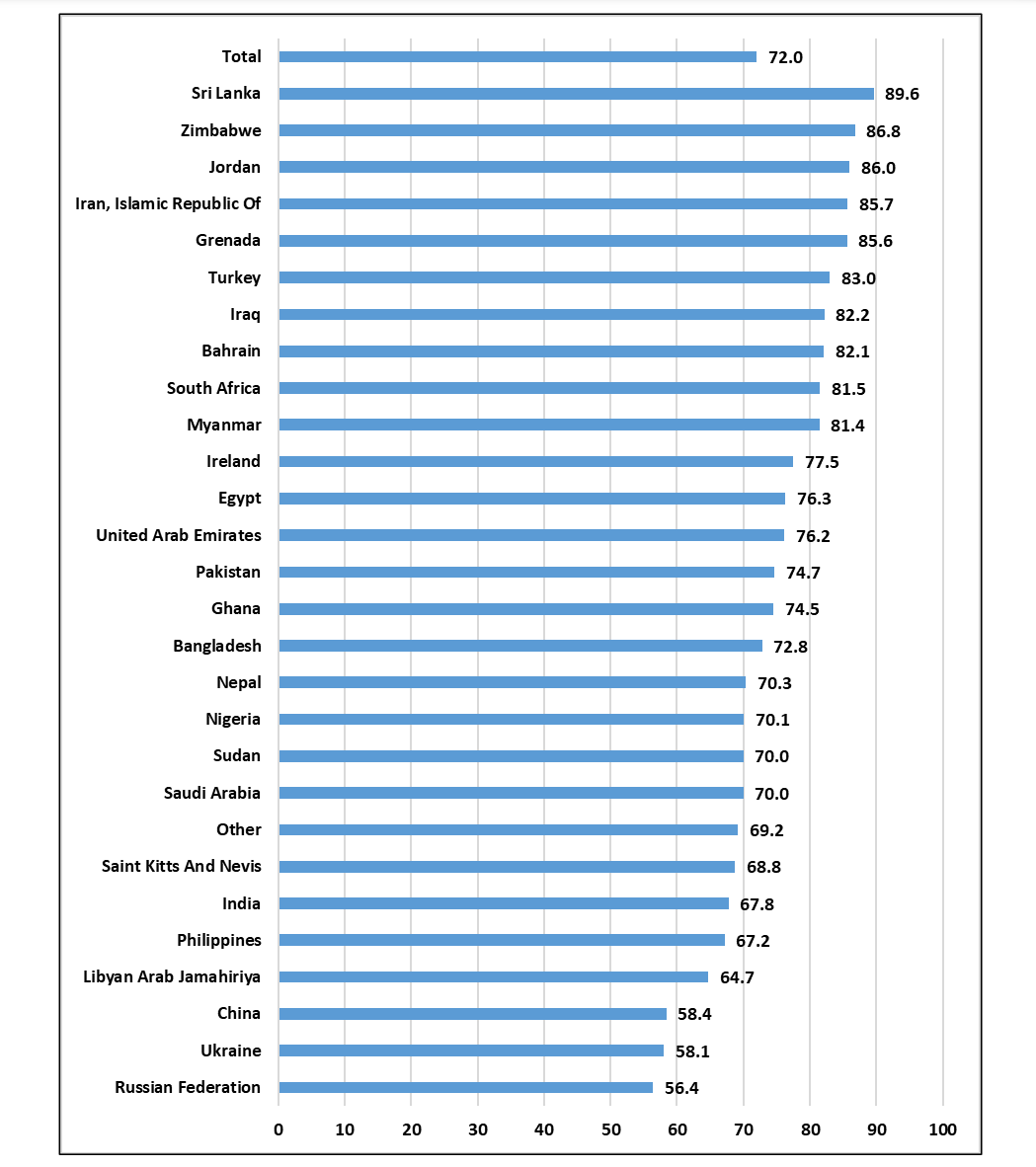
PLAB1 pass rates by PMQ country of origin (highest to lowest)
However, the same reports revealed a significant challenge for these professionals in the practical component, PLAB 2. With a pass rate of 47.5%, Sri Lankan doctors recorded the lowest success rate in this hands-on assessment.
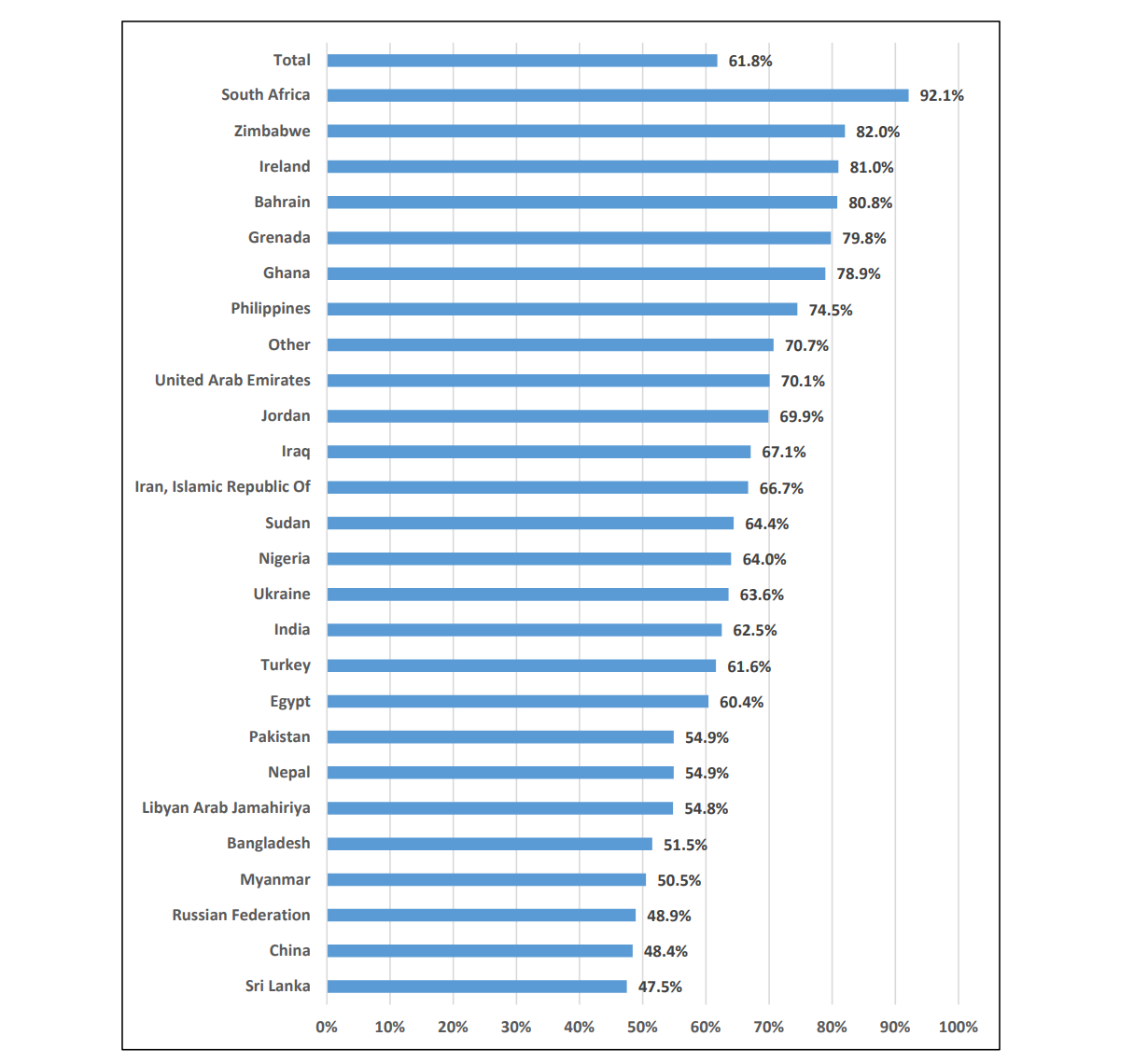
PLAB2 pass rates by PMQ country of origin (highest to lowest)
As more doctors qualify to practice abroad, the Health Ministry in Sri Lanka is faced with the urgent task of addressing the underlying issues driving this migration. The departure of skilled medical professionals threatens to exacerbate the existing challenges within the country's healthcare system, potentially leading to a shortage of experienced doctors and impacting patient care.
The ongoing trend of doctors seeking opportunities abroad reflects broader concerns within the Sri Lankan healthcare sector, including working conditions, career prospects, and compensation. Addressing these issues is crucial to retain talent and ensure the sustainability of healthcare services in Sri Lanka.