

Numbers.lk
@numberslka
$286 a Barrel 🛢️? Behind Sri Lanka’s 🇱🇰Fuel Cost Confusion
$286 a Barrel 🛢️? Behind Sri Lanka’s 🇱🇰Fuel Cost Confusion
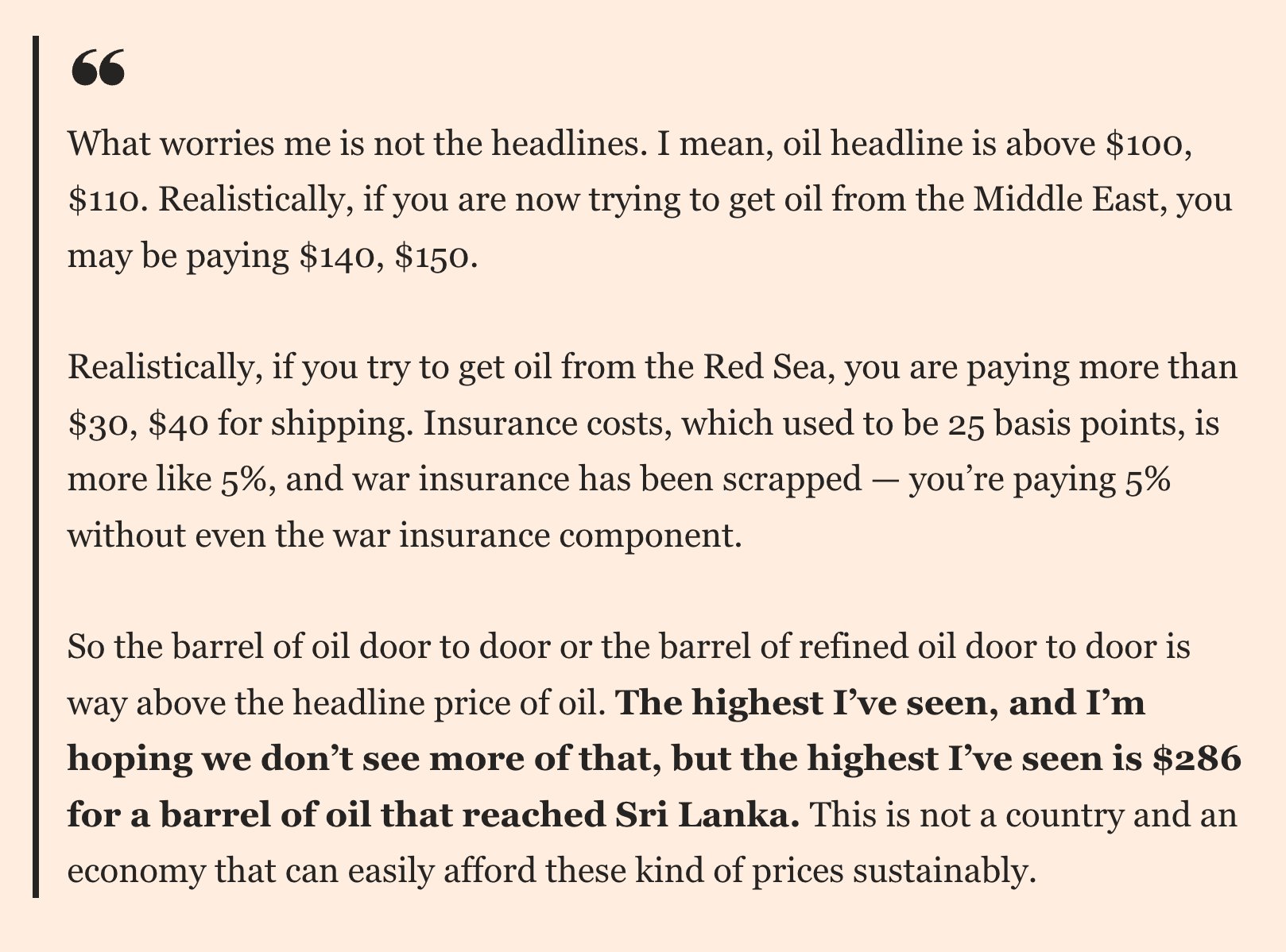
⭕️ The recent remark by HSBC CEO Georges Elhedery, which linked Sri Lanka to oil costs of up to $286 per barrel, created significant confusion because the wording appeared to blur the distinction between crude oil and refined fuel.
⭕️ The discussion seems to begin with crude oil benchmarks and then move toward the broader delivered cost of oil or fuel in Asia. However, that shift was not made clearly, which made the remark ambiguous and easy to misunderstand as a reference to crude oil specifically.
⭕️ When global oil prices are discussed, it's usually refer to crude oil benchmarks. Refined products such as diesel and petrol are priced differently due to additional costs like refining, transport, and premiums.
⭕️ Many outlets including Sri Lankan media initially reported that the country had purchased crude oil at $286 per barrel. This figure is extremely high almost three times the benchmark index price and naturally raised concerns.
⭕️ However, CPC clarified that Sri Lanka did not purchase crude oil at that price. Instead, it said the country had purchased diesel, a refined petroleum product, at prices similar to those mentioned by the HSBC CEO.
⭕️ Global diesel prices had risen sharply during that period. According to CPC, based on flat averages, the highest base price was around $242 per barrel, while premiums rose to $48 to $50 due to supply constraints and increased demand linked to disruptions in the Middle East. As a result, the total landed cost increased significantly.
⭕️ When compared with the NYMEX Singapore Gasoil (Platts) index, which was about $232.57 per barrel on April 6, 2026. (highest) The difference is largely explained by the added premiums.
⭕️Given the circumstances, such pricing is not entirely unreasonable. In a supply-constrained environment, governments often have no choice but to procure fuel at elevated prices to avoid severe economic disruption.
⭕️ A failure to secure fuel would lead to transport breakdowns, power shortages, and widespread economic damage. The deeper issue, however, is structural.
⭕️ Sri Lanka 🇱🇰 does not maintain adequate buffer stocks for energy imports, whether oil, LPG, or coal. This lack of storage capacity forces the country to buy fuel at spot prices during crises, often at significant premiums.
⭕️ As a result, Sri Lanka loses millions of dollars annually due to price volatility and emergency purchasing decisions.
⭕️ Why has the country not invested in sufficient storage infrastructure? The lack of priority and the slow pace of such projects are a serious issue.
⭕️ Such an investment would allow Sri Lanka to build strategic reserves, purchase fuel during lower price periods, and reduce exposure to sudden market shocks. Over time, the savings from avoiding premium purchases could recover the investment within few years.
⭕️ In the context of energy trade, investment in storage is not especially large. A single shipment of refined fuel can cost more than $50 million, while a modern storage facility may cost no more than the value of two or three such shipments.
⭕️ The real issue is not the price paid during a crisis, but the lack of long term planning that forces the country into these situations repeatedly. All discussion, but no action.
⭕️ Probably, things like this do not get built because emergency energy purchases create opportunities for commissions for certain parties. These are the real structural issues we need to solve if we want to address the energy problem in the long run.
#SriLanka #Energy
Sources
- Original post on X — Numbers.lk (@numberslka)