

Numbers.lk
@numberslka
⚡ Talk Renewables, Eat Coal: Sri Lanka’s 🇱🇰 Lethargic Solar Energy Policy
⚡ Talk Renewables, Eat Coal: Sri Lanka’s 🇱🇰 Lethargic Solar Energy Policy
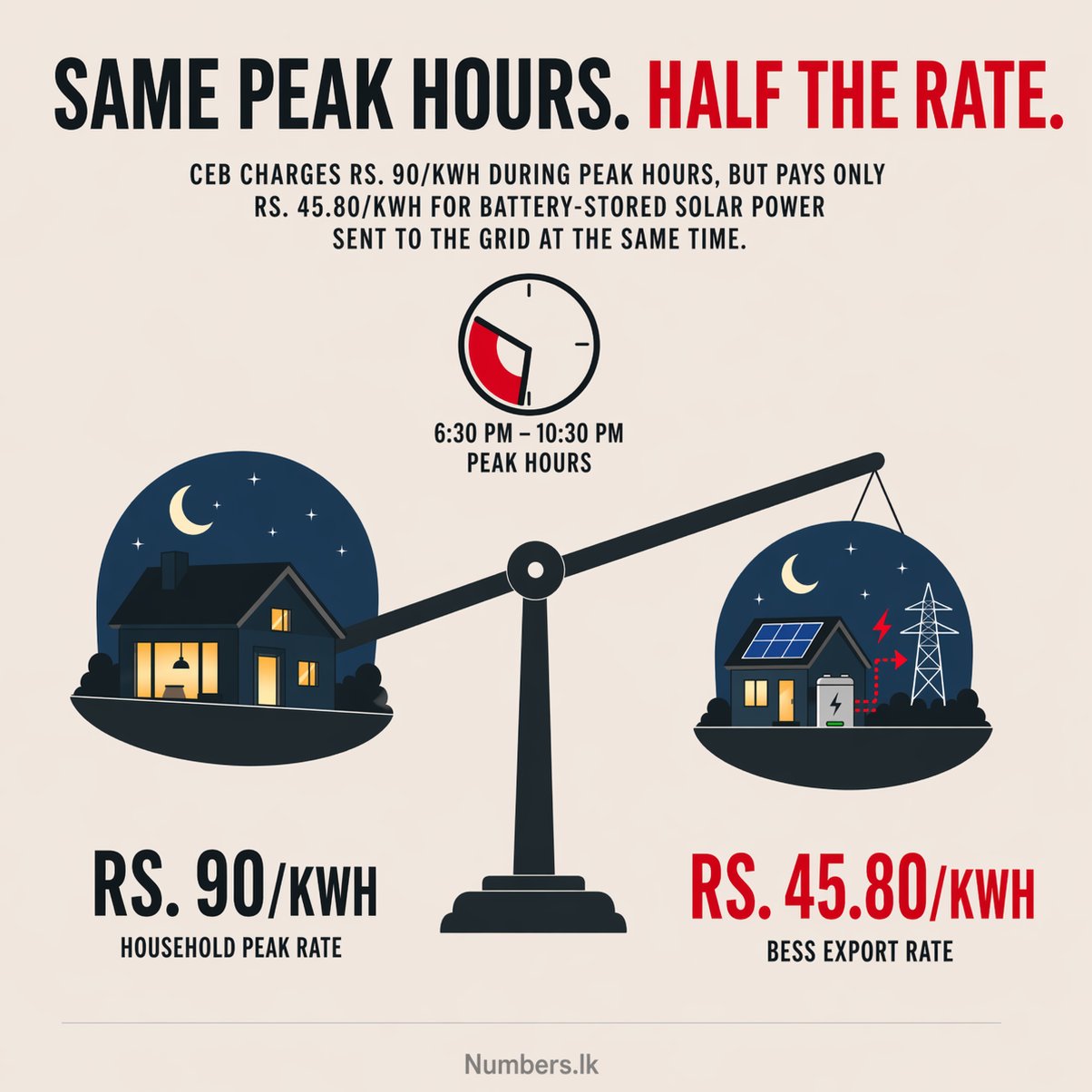
⭕ Sri Lanka’s 🇱🇰 2026 Domestic TOU electricity tariff charges Rs. 90/kWh for power used during the 6:30 pm–10:30 pm peak window.
⭕ But under the 2025 battery storage export scheme, privately stored solar power discharged to the grid during the same peak window is paid only Rs. 45.80/kWh.
⭕ That creates an almost 2x gap between what the system charges consumers and what it pays those who supply energy back to the grid during peak hours.
⭕ With rising global energy uncertainty, fuel price risks, and fear of power cuts, many existing solar users are already considering battery-backed upgrades. A better export rate could be the nudge they need to move toward battery-backed system.
⭕ If electricity tariffs can be revised every 3 months, Battery Energy Storage System (BESS) export rates should also be reviewed regularly.
⭕ One option is to link Battery Energy Storage System (BESS) payments to the actual peak tariff at the time of discharge, for example at 80% of the peak tariff.
⭕ More battery-backed solar would reduce peak-time diesel generation, lower foreign currency pressure, and help bring down electricity costs for all consumers.
⭕ These are policy decisions that sit directly with elected officials and energy policymakers. Changes like this do not require a major new system; they simply require updating the numbers and aligning incentives with Sri Lanka’s 🇱🇰 energy needs.
⭕ If the government cannot act and timely implement a simple, obvious policy like these -despite all the talk- it raises serious doubts about its ability to deliver more complex energy reforms.
#SriLanka 🇱🇰 #Energy
Sources
- Original post on X — Numbers.lk (@numberslka)