

Numbers.lk
@numberslka
🇱🇰 Sri Lanka Adds 50% Surcharge on Vehicle Import Duties Amid FX Pressure
🇱🇰 Sri Lanka Adds 50% Surcharge on Vehicle Import Duties Amid FX Pressure
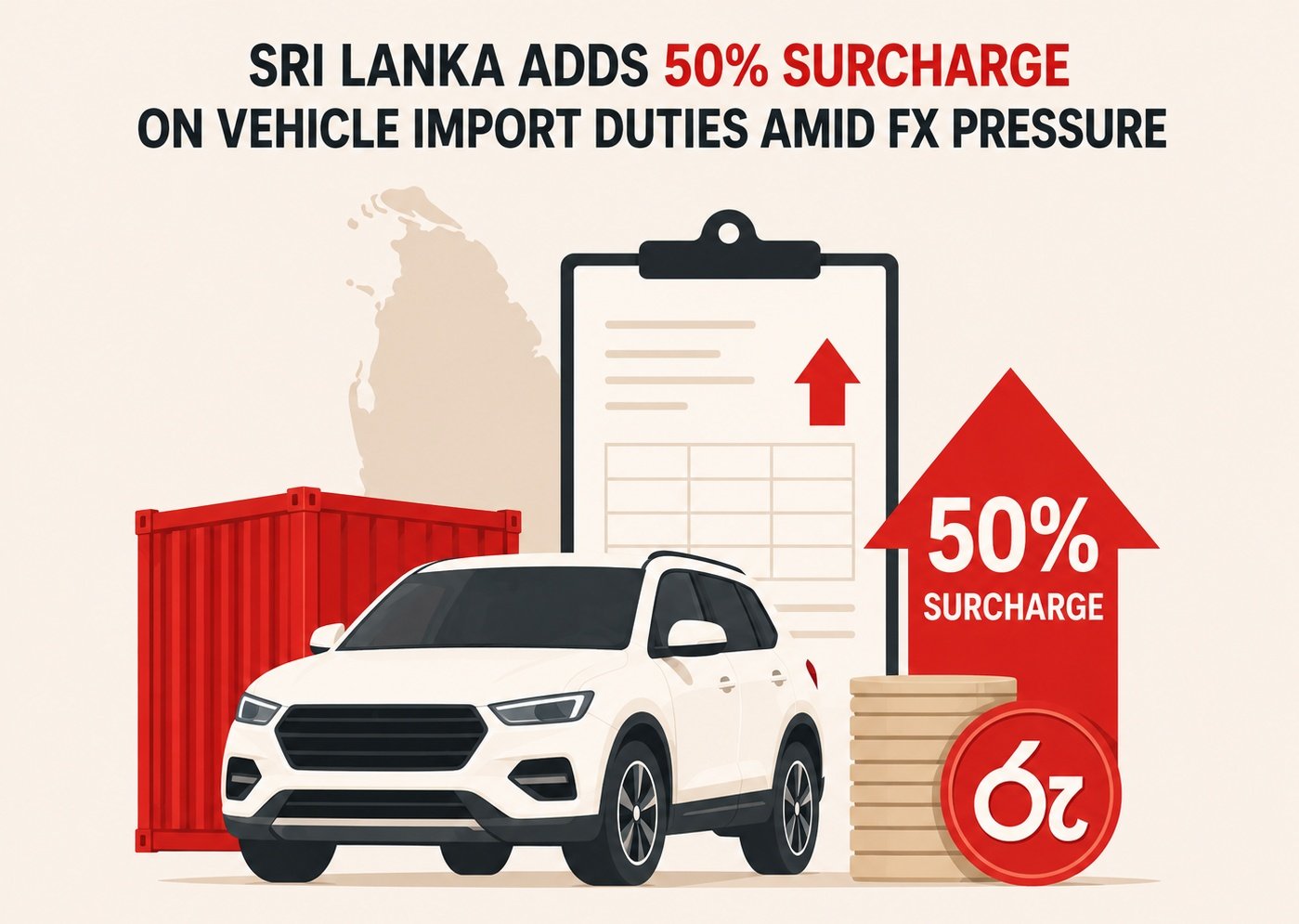
⭕ Sri Lanka has imposed a 50% surcharge on customs duties for imported vehicles to reduce import demand and ease pressure on foreign exchange reserves.
⭕ Deputy Finance Minister Anil Jayantha Fernando said the move is aimed at delaying vehicle imports by at least three months due to the current pressure on foreign currency reserves.
⭕ The Sri Lankan rupee has depreciated by 4.5% against the US dollar so far in 2026, according to official figures.
⭕ Vehicle imports already face a 30% customs duty. With the new surcharge, the effective customs duty rate increases to 45%.
⭕ This increase will also affect VAT and SSCL, as the tax base for both includes customs duty and the surcharge.
⭕ Based on our estimates, for most commonly sold popular vehicle categories, this could translate into around a 10% increase in market prices.
⭕ Sri Lanka already imposes taxes of more than 100% on many vehicle categories, with the total tax burden averaging around 150%. This move will further increase taxes on top of already high rates.
⭕ A separate 2.5% Social Security Contribution Levy on imported vehicles took effect from April 1, 2026, and is collected directly by Sri Lanka Customs.
Analysis:
⭕ After the initial surge in vehicle imports, FX outflow from vehicle imports has started to decline, according to CBSL data. From January to May, it dropped by around 14%, from USD 224 million to USD 196 million.
⭕ The bigger recent pressure appears to be from fuel imports. Fuel import costs increased from USD 98 million in February 2026 to USD 368 million in April 2026.
⭕ Instead of repeatedly trying to control FX pressure through vehicle import restrictions, which only inflate an asset class with limited contribution to economic growth, Sri Lanka needs a long-term strategy to reduce energy-related FX pressure.
⭕ Lowering VAT on batteries and solar panels, introducing reasonable pricing for battery-backed exports to the grid during peak hours, and incentivizing EV adoption are common-sense solutions.
⭕ Short-term policy changes like increasing import duties may patch the issue temporarily. But until Sri Lanka reduces its dependence on foreign exchange for energy, the country will continue to face the same problem again and again.
The Government should think a step further and introduce policies that are genuinely beneficial for the country in the long run.
#SriLanka
Sources
- Original post on X — Numbers.lk (@numberslka)