

Numbers.lk
@numberslka
Nearly $1 Billion Moved Overseas With No Imports to Show - Four Bank Officials Arrested
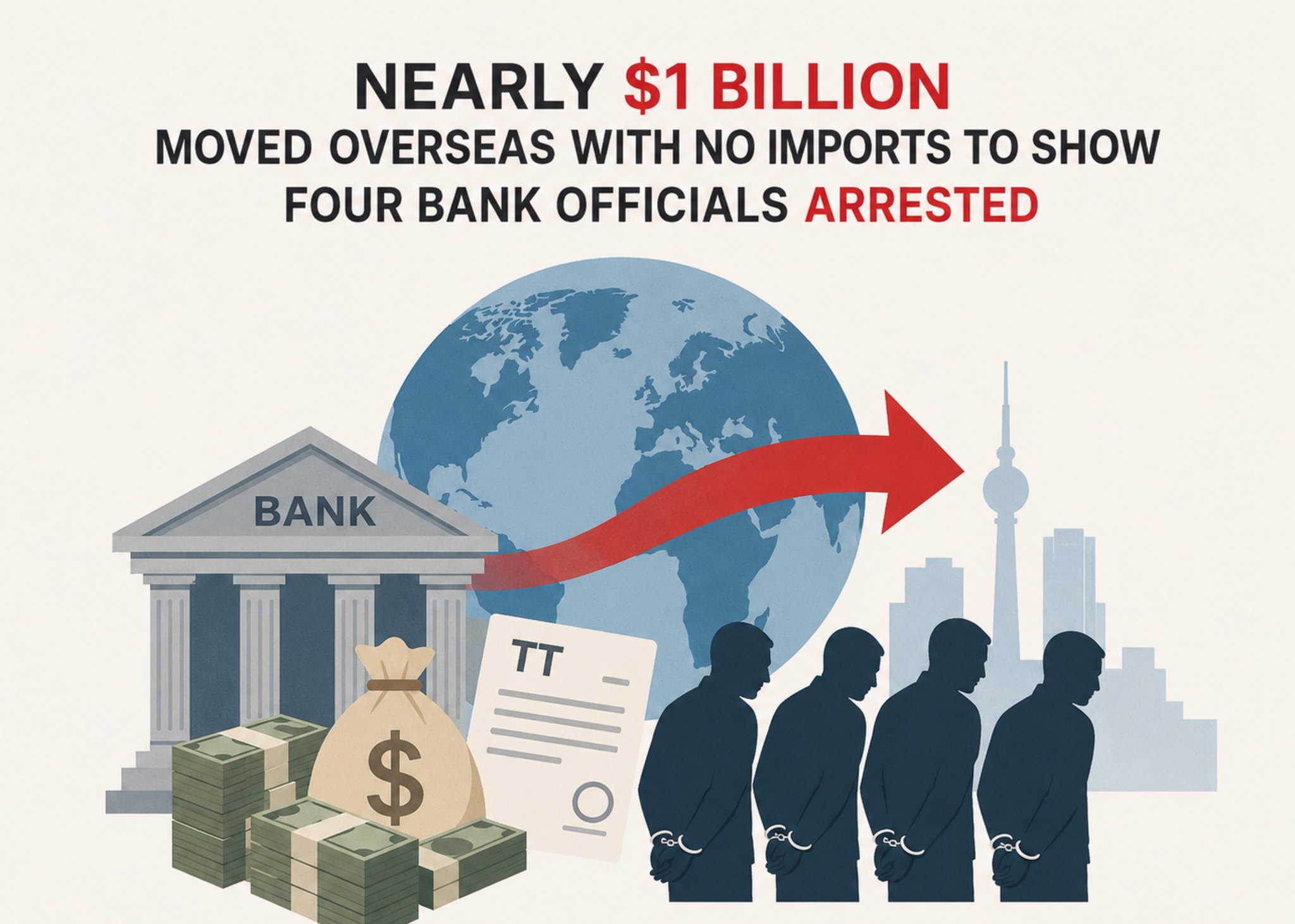
⭕ Four officials from Seylan Bank, Sampath Bank, Union Bank and Nations Trust Bank were arrested by the CID's FCID over an alleged illegal capital transfer network worth nearly $1 billion, or Rs. 340 billion.
⭕ Investigators allege bank officials received weekly payments of Rs. 30,000 to Rs. 100,000 for issuing TTs and approving trade finance. One manager allegedly received a one-off payment of Rs. 1 million.
⭕ The alleged "phantom imports" network used 105 shell companies, 227 bank accounts and 26,108 TTs for supposed imports.
⭕ It is being reported that the network was also used in attempts to move funds linked to drug trafficking and an alleged Rs. 13 billion financial fraud involving a major bank.
⭕ Investigators identified the lack of real-time digital links between Sri Lanka Customs' ASYCUDA system and commercial banks as a key systemic weakness. TT money transfers can involve multiple payments, and importers have 180 days to import. A single import can have multiple TTs, and a TT is not necessarily tied directly to one specific import — making reconciliation far from simple and the audit process highly complex.
⭕ Bank conduct in these cases is very questionable. When an ordinary citizen opens a bank account, or makes a transaction slightly larger than usual, they are asked all sorts of questions to verify its legality. Yet it's highly strange that when these entities — essentially belonging to random parties — were making TTs worth millions, they were never asked for the source of their funds.
⭕ A wider regulatory issue dates back to 2017, when Sri Lanka repealed the Exchange Control Act and introduced the Foreign Exchange Act No. 12 of 2017, shifting foreign exchange regulation to a more liberalised framework under the Central Bank.
⭕ The 2017 law relies heavily on administrative enforcement and fines to regulate this. The maximum penalty is Rs. 1 million, which is clearly not enough to serve as a deterrent.
⭕ The current case is being pursued under Sri Lanka's Proceeds of Crime Act, No. 5 of 2025, which creates offences for knowingly transferring, concealing, possessing or using property derived from unlawful activity. This is a roundabout route to prosecution, since no direct law exists to directly penalize those involved.
⭕ This creates a much longer prosecutorial route. Instead of relying on a straightforward offence specifically targeting the illegal outward transfer itself, investigators may need to establish the underlying unlawful activity, trace the proceeds, prove knowledge or involvement, and then build the proceeds-of-crime case around it.
#SriLanka
Sources
- Original post on X — Numbers.lk (@numberslka)