
Desk
Reporting
Trackers
Maps
Tools
During the colonial era, Sri Lanka, with its ideal terrain and climate was originally chosen for coffee farming. However, after the devastating impact of Coffee Rust Disease, the country shifted its focus to tea. Today, with the revival of the coffee industry, Sri Lanka is making a comeback, cultivating both Arabica and Robusta coffee varieties.
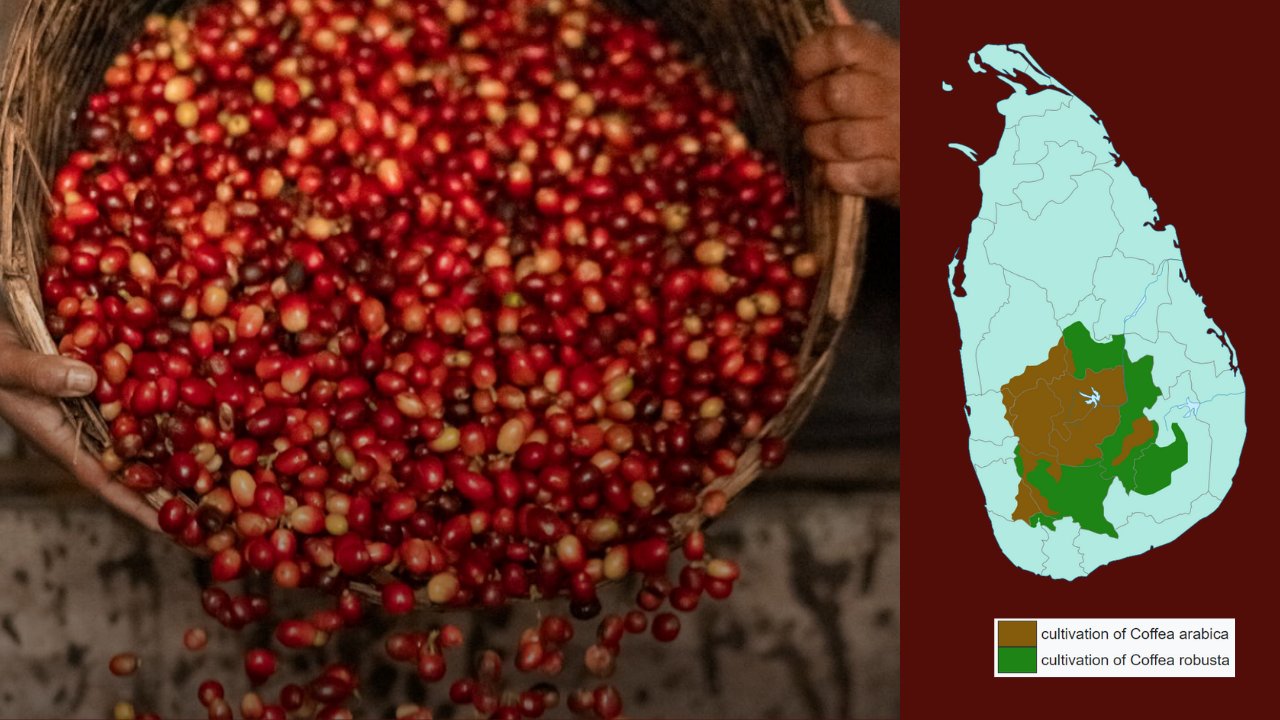
Coffee, the globally beloved beverage, has a deep-rooted connection to Sri Lanka’s agricultural history. Introduced in the early 17th century by Arab traders, coffee became one of the island’s earliest export commodities. In the mid-18th century, the Dutch 🇳🇱 started systematic coffee cultivation in Sri Lanka but had limited success, but coffee flourished under British rule, establishing Sri Lanka (then Ceylon) as one of the top coffee producers in the world. However, this success was short lived. By 1880, the coffee leaf rust disease (Hemileia vastatrix) devastated Sri Lanka's thriving coffee industry.
Despite efforts to combat the disease, production plummeted.
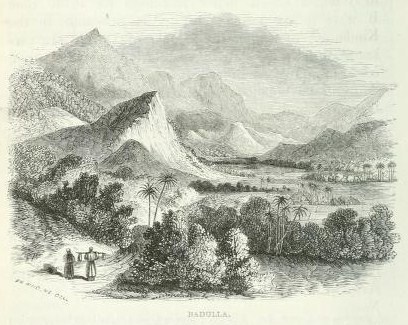
Plate from Ceylon, Physical, Historical and Topographical, titled "The Coffee Regions. Badulla
By the mid-1800s, Sri Lanka was a key player in the global coffee market, alongside Brazil and Indonesia. The British, recognizing the island’s ideal conditions for coffee cultivation, rapidly expanded its production. At its peak in the 1860s, Sri Lanka had 275,000 acres of coffee under cultivation, producing and exporting over 70,000 metric tons (4,000 containers). However, production plummeted by 1880 due to the devastating coffee leaf rust disease (Hemileia vastatrix), leading to the collapse of the industry by the 1890s. This forced farmers to abandon coffee cultivation in favor of tea, which would later become Sri Lanka’s primary export.
In recent decades, Sri Lanka has witnessed a renewed interest in coffee production, particularly in the specialty coffee sector. Driven by investments in quality improvement and expanded cultivation areas, Sri Lanka’s coffee industry has slowly begun to recover. The country’s central highlands, with their high altitudes and cooler temperatures, provide ideal conditions for growing Arabica coffee, which is prized for its superior flavor profile compared to Robusta. Although Robusta, with its higher yields and resistance to pests, still dominates production, the rising focus on Arabica could position Sri Lanka as a key player in the specialty coffee market.
This revival coincides with the global coffee market’s projected growth. The global output for coffee is expected to increase by 5.8% to 178 million bags in 2024 from 168.2 million bags in 2023, out of which Arabica coffee is expected to increase by 8.8%. This offers a significant opportunity for Sri Lanka, especially as the demand for specialty coffee grows. However, success depends on navigating various challenges, particularly the climate change.
The study "Climate Change and Coffee in Sri Lanka," commissioned by MDF, underscores the potential impact of climate change on coffee cultivation. As global temperatures rise, Sri Lanka’s coffee-growing regions could shrink, and yields may decline. Higher temperatures could also exacerbate pest outbreaks, reducing the quality and quantity of coffee produced. Sri Lanka is not alone in this predicament. Major coffee producers like Brazil and Ethiopia are also expected to lose significant portions of their coffee-growing land if temperatures rise above 1.2°C.
The risks posed by climate change cannot be ignored. In a worst-case scenario, the shift in temperature could push coffee cultivation to higher altitudes, leading to increased costs for transitioning plantations and infrastructure. This is particularly relevant for Arabica coffee, which is more sensitive to temperature changes compared to Robusta. If Sri Lanka is to protect its coffee industry from these risks, adaptive strategies are essential.
To ensure the long-term viability of coffee production in Sri Lanka, strategic adaptation to climate change is necessary. This includes implementing sustainable farming practices such as water management and soil conservation to mitigate the effects of rising temperatures. Additionally, the expansion of climate-resilient coffee varieties, including high-quality Robusta strains, could provide a buffer against environmental challenges.
Sri Lanka’s potential to develop a climate-resilient coffee industry also opens the door to new market opportunities. As global demand for sustainable and ethically sourced coffee grows, Sri Lanka’s coffee producers can position themselves as leaders in environmentally conscious cultivation. By leveraging its historical legacy and investing in innovation, Sri Lanka could regain its status as a key player in the global coffee market.
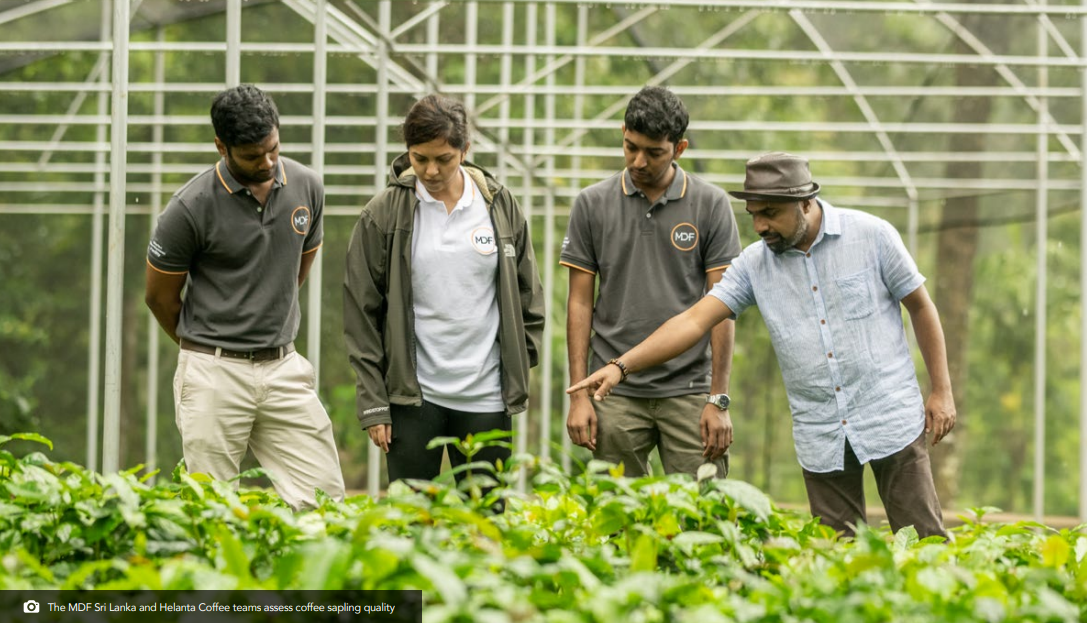
The MDF Sri Lanka and Helanta Coffee teams assess coffee sapling quality
Sri Lanka's coffee industry stands at a pivotal moment, where the modern resurgence of specialty coffee brings renewed hope for its future. However, this optimism is tempered by the growing threat posed by climate change, which endangers the progress of this revival. With the adoption of strategic planning and the implementation of climate-resilient agricultural practices, Sri Lanka has the potential to not only protect its coffee sector but also make a significant contribution to the global coffee market. If these efforts are successful, the country could once again flourish as a producer of high-quality coffee, establishing a niche in the specialty coffee market. This could ultimately elevate the coffee industry to become a vital and sustainable part of Sri Lanka’s economy.